Launch of the “Q-Bit Programming” Educational Career Guidance Project for School Students Preparing for Computer Science Olympiads
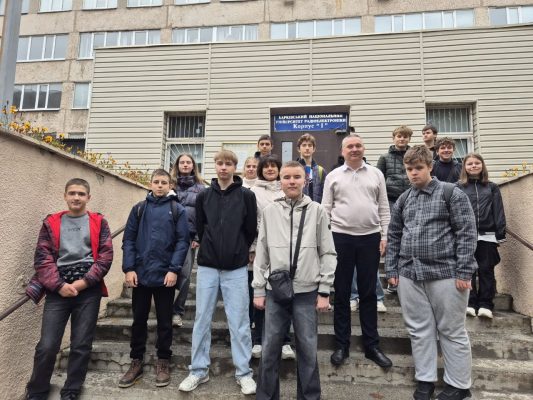
On October 17, 2026, the educational career guidance project “Q-Bit Programming” was launched. The project aims to prepare school students for computer science Olympiads, deepen their knowledge in computer science and information technology, and help them determine their future career paths. The project will run for two months.
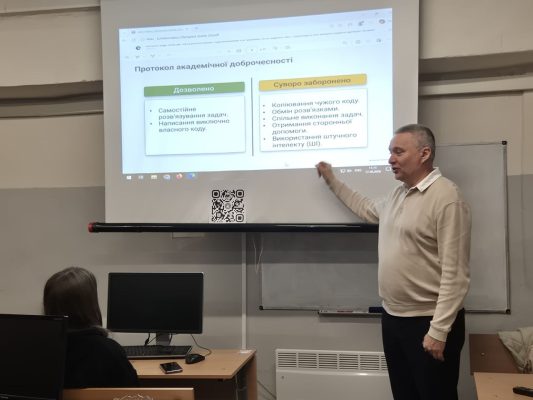
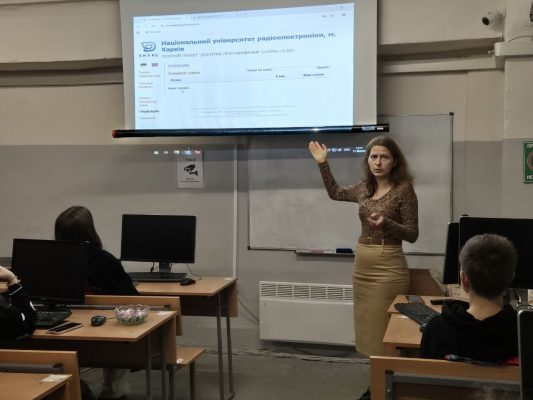
The opening of the project was attended by O.A. Kobylin, Head of the Department of Informatics at Kharkiv National University of Radio Electronics; I.M. Zhovtonizhko, Associate Professor at the Department of Applied Mathematics; O.Ie. Putiatina, Senior Lecturer at the Department of Informatics; as well as representatives of the Novobavarskyi District Education Department.
During the introductory meeting, the students learned about the degree programs, majors, and educational opportunities offered at NURE. They were introduced to the main goals and features of the project, career development prospects in the IT industry, and the opportunities provided by education in IT. Special attention was devoted to preparing for the first stage of the All-Ukrainian School Olympiad in Computer Science.
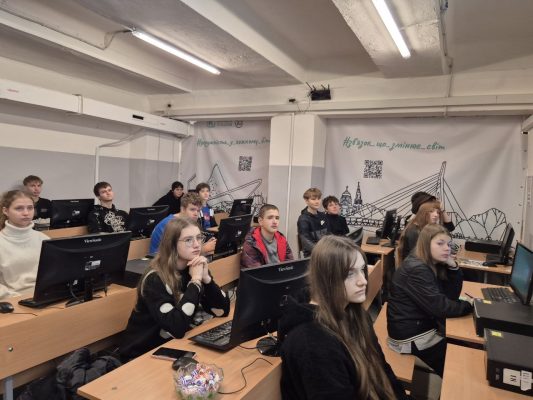
The first lesson brought together around 25 students who demonstrated a keen interest in programming, modern technologies, and intellectual competitions.
The “Q-Bit Programming” project involves mastering the fundamentals of programming, completing practical assignments, and step-by-step preparation for solving Olympiad-level problems. Participants will have the opportunity to deepen their knowledge of computer science, develop algorithmic and logical thinking, learn to find effective solutions to complex problems, and apply their knowledge in practice.
This educational initiative makes a direct contribution to the implementation of the UN Sustainable Development Goals, in particular:
- Goal 4: Quality Education — by providing school students with access to advanced mathematical and IT training, fostering digital skills, and cultivating critical and algorithmic thinking;
- Goal 8: Decent Work and Economic Growth — through early career guidance for youth, preparing highly qualified future specialists for the high-tech sector of the economy, and increasing their competitiveness.
The project aims not only to help school students prepare for intellectual competitions, but also to unlock their potential, support their interest in computer science, and encourage an informed choice of a future career in IT.